by admin | Apr 16, 2020 | Newspaper Report
Philip Gain | News Link
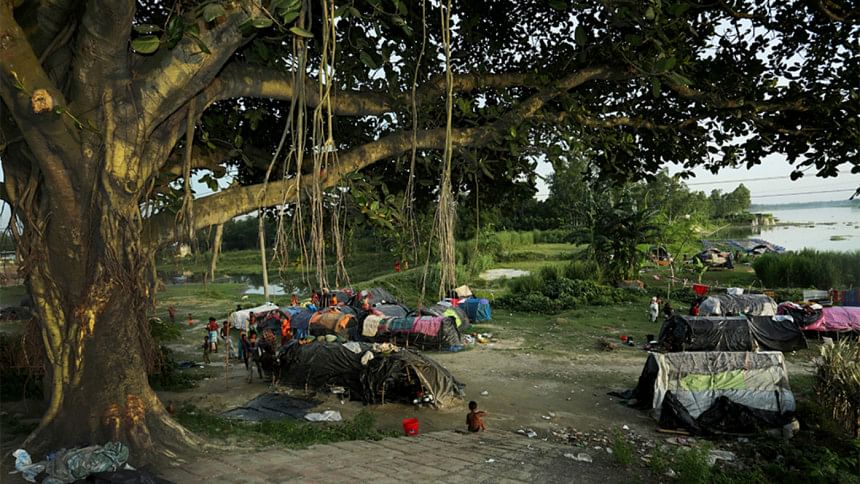
A typical temporary Bede camp. Bedes are among the excluded and marginalised groups that need urgent attention and care during this time of crisis. Photo: Philip Gain
The coronavirus has affected us all—rich and poor alike. Yet, giving attention and care to communities considered excluded, marginalised and invisible should be a priority for the state and well-to-dos. The majority of these communities are not only poor or extreme poor, they also face the triple challenges of poverty, vulnerability and exclusion. Many may go hungry or starve. Snapshots of how these communities are doing during the current lockdown may be useful.
The tea workers in 163 tea gardens in Sylhet and Chattogram divisions have continued to work as usual to the great satisfaction of the owners. Like the garment workers, they also demanded holidays with the payment of wages and fringe benefits (ration). But the government and the owners decided that these “tied” workers must work because they assume the tea workers live in safe enclaves and that there is no harm if they work to keep the tea gardens operational. Needless to say, the tea gardens are not yet included in the government’s stimulus packages meant to address the impacts of the coronavirus on the country’s economy and health.
There is another serious issue in the tea gardens with half a million people. Generally, a tea worker’s family has one worker earning a daily cash pay of Tk 102, plus some ration. This is not sufficient for a family of five to survive on. At least one person from each tea worker’s family goes out of the tea garden every day to work as day labourer in agriculture, brick kilns, orchards, houses and so on. “The number of people who explore daily work through contractors or themselves far exceeds the total number of tea workers,” says Nripen Pal, joint secretary of Bangladesh Cha Sramik Union (BCSU), the lone union of around 100,000 registered tea workers. These extra workers continued to explore work outside the tea gardens even after the countrywide lockdown had begun. “But most have eventually stopped going out to sell labour, which has pushed the tea workers and their families in great difficulties,” says Rambhahjan Kairi, general secretary of BCSU.
The tea workers still want holidays covered by the government’s recovery package plan. As regards the surplus and unemployed labour forces, it is time for the government, owners and BCSU to quickly list these people and bring to them adequate relief support and safety that are reportedly lacking at workplaces and the labour lines.
A non-Bangalee occupational community, Harijan, also known as sweepers and cleaners, live in congested Harijan pallis (colonies) under the city corporations and municipalities. Most of the Harijan pallis that shelter around 100,000 souls are located in the dirtiest places of the cities. The supplies of relief and safety materials are reported to be very inadequate in these colonies. “The city corporations in Dhaka gave us some soap and bleaching powder just once,” says Krishnalal, president of Bangladesh Horijan Yokkha Parishad (BHYP), an organisation of the Harijans.
Like in the tea gardens, those from among the Harijans that are not registered workers work in government and non-government offices and respond to calls for cleaning. Now at this time of lockdown, these “social outcasts” or “Dalit” do not have work. They need special care from the state.
The life of the Bede community, a floating people with a population of 75,702 (according to the Department of Social Services—the Bedes estimate their population at up to half a million), has been hit hard by the coronavirus. Most of them living in tiny tents and roaming around the country are caught in the fields or roadside. They are not members of local communities when in the fields and are unlikely to get proper care from the local administration and elected bodies. The government with a directive to local administration can take better care of the Bede community.
Of the nearly 100,000 female sex workers, only around 4,000 are based in 11 brothels in the country that have been literally locked. What the brothel-based sex workers have been getting from the government sources is reported to be just nominal. The situation of 36,593 street-based sex workers, many of them lacking even accommodation, is appalling. There are another 36,539 sex workers working from residences and 15,960 are hotel-based.
The 10,000 Hijras or transgender individuals (government account) are no better than the street-based sex workers because streets and bazars are basically places where they beg and collect alms from. A big percentage of them are also sex workers. At this time of crisis, sex workers and Hijras are crying for helping hands.
A seafaring Hindu fishing community, the Jaladas, with a population of 150,000 in Cox’s Bazar and Chattogram districts, have been restricted from fishing in the sea. Dr Harishankar Jaladas, noted educationist and writer from the Jaladas community, reports, “Relief materials are not reaching many Jaladas in coastal villages.” The local administration should look into the allegation and scale up assistance to the fishers of the Jaladas community.
Approximately 300,000 Urdu-speaking Biharis, living in inhuman condition in 70 camps in 13 districts, are getting almost no attention. Of these camps, 33 are in Dhaka. “No government relief has reached any of the Bihari camps yet,” reported (on April 9) M Shoukat Ali, general secretary of Stranded Pakistanis General Repatriation Committee (SPGRC). “We are confined to the camps. We need food aid and safety materials.”
A tiny community of around 12,000 people, the Kaiputras (who rear pig in the open space)—inhabiting 41 villages in the southwestern districts of Jashore, Khulna and Satkhira—are also in trouble. The Kaiputra rakhals (who live with pigs to feed them in the open fields) and their pigs are going through unimaginable hardships at this time of coronavirus pandemic.
Dilip Mondol, a pig trader from Jashore, was in Shariatpur recently with his herd of 600 pigs and 15 rakhals. “The people of Shariatpur pointed their fingers at us as if we are criminals,” says Mondol, “and asked us to leave the area immediately. I walked the pigs to Narail.” The Kaiputras cannot market their pig during the lockdown at all.
Rishis (cobblers and leather workers), also identified in derogatory terms such as muchi, chamar and charmokar, are being equally affected. Although their main concentration is in Jashore, Satkhira and Khulna, they are found in all districts. Those who repair and polish shoes around the country and make bamboo produces have no work now. “Rishis of the southwestern districts are hardly getting any government relief materials,” reports Milon Das, director of Parittran, a Satkhira-based organisation working for the Rishis and Dalits.
Of at least two million ethnic populations, those in the Chittagong Hill Tracts that are dependent on jum (shifting cultivation), living in remote areas, and dependent on subsistence economic activities (selling agricultural produces) are faced with a very difficult time. “Scarcity of food is evident in the CHT, already in the crisis months of the year,” says Han Han, a development consultant.
The district and local administrations are aware of the situation. “It is difficult to reach food in some remote areas,” said Prakash Kanti Chowdhury, member of the CHT Development Board (CHTDB). “In reaching the needy during the food crisis, we are following the lists prepared by the UNOs and Union Parishads.”
In the plains and outside the tea gardens, the ethnic communities, particularly the farmers, day labourers and those who work in rail stations and live in slums, need extra care from the government.
There are a number of other excluded and marginalised communities who need special care at this time of crisis. The disabled, Napit (barber), Dhopa (washer-man), Tati (weaver), Darji (tailor), Hajam (unqualified doctors for circumcision), Kasai (butcher), blacksmiths, and so on are among these affected communities. Let us also not forget the people who beg and live on the streets.
The entire country along with the whole world is in deep grief. We do not know exactly how long the pandemic will continue. However, in the fight against the coronavirus, the government and the well-to-dos in society should be caring to the estimated seven million people of these already excluded and marginalised communities. It should be our pledge that no one, nowhere, will go hungry or die without care.
Philip Gain is a researcher and director of Society for Environment and Human Development (SEHD). Email: philip.gain@gmail.com
by admin | Apr 1, 2020 | Newspaper Report
ফিলিপ গাইন | News Link
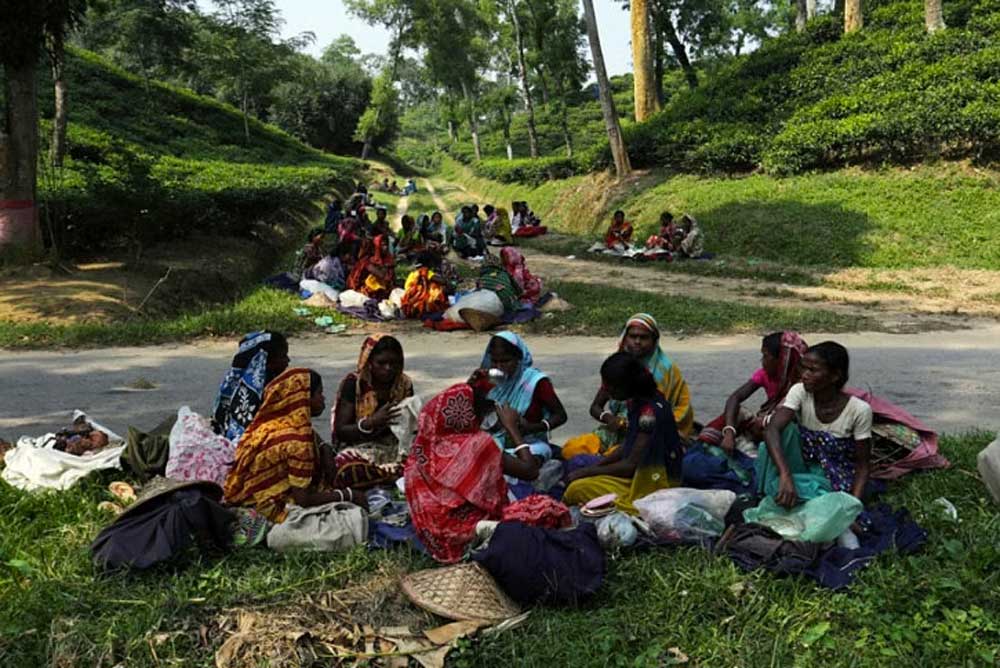
বুধবার, এপ্রিল ১, ২০২০ ০৩:০৯ অপরাহ্ন | খোলা জায়গায় কাছাকাছি বসেই দুপুরের খাবার খেয়ে থাকেন চা-শ্রমিকরা। ছবি: ফিলিপ গাইন
করোনাভাইরাস মোকাবিলায় গত ২৬ মার্চ থেকে ১০ দিনের সাধারণ ছুটি ঘোষণা করেছে সরকার। এ সময়ে জরুরি পরিষেবা ছাড়া সরকারি-বেসরকারি প্রতিষ্ঠানসহ শিক্ষাপ্রতিষ্ঠান বন্ধ রাখতে বলা হয়েছে। পাশাপাশি সারাদেশে জনসমাগম বন্ধ রাখা ও সামাজিক দূরত্ব বজায় রাখার নির্দেশ দিয়েছে সরকার।
কিন্তু, এ সময়েও বন্ধ হয়নি দেশের চা-বাগানগুলো। সে কারণে, গত ২৭ মার্চ থেকে নিজ উদ্যোগেই কাজ বন্ধ করে দিয়েছিলেন মৌলভীবাজারের কমলগঞ্জ উপজেলার শমশেরনগর চা-বাগানের শ্রমিকরা।
ডানকান ব্রাদার্স মালিকানাধীন বৃহৎ শমশেরনগর চা-বাগানটিতে স্থায়ী শ্রমিকের সংখ্যা ২ হাজার ৪০৪।
গত ২৭ মার্চ সকালে চা-বাগান পঞ্চায়েত কমিটি, স্থানীয় গণ্যমান্য ব্যক্তি ও চা-শ্রমিকদের ৫০ জনের মতো একটি দল বাগান ব্যবস্থাপকের কাছে গিয়ে জানান, তারা কাজ বন্ধ করে দিতে চান।
চা-বাগানের পঞ্চায়েত কমিটির সাধারণ সম্পাদক শ্রীকান্ত কানু গোপাল বলেন, ‘গত ২৫ মার্চ দেওয়া ভাষণে প্রধানমন্ত্রী সবাইকে ঘরে থাকতে বলেছেন। তাহলে আমরা কেন কাজ করবো? এটি নিয়ে বাগান ব্যবস্থাপকের সঙ্গে আমরা কথা বলি। কিন্তু, তিনি শ্রীমঙ্গলের শ্রম অধিদপ্তরের বিভাগীয় শ্রম দপ্তরের উপপরিচালকের একটি চিঠির বরাত দিয়ে জানান, এ ছুটি চা-শ্রমিকদের জন্য প্রযোজ্য নয়। কিন্তু, আমাদের জীবন চায়ের থেকেও মূল্যবান। তাই আমরা নিজ উদ্যোগেই বাগান বন্ধ করে দিয়েছিলাম।’
শমশেরনগর চা-বাগানের শ্রমিকদের নেওয়া এই পদক্ষেপে প্রায় এক লাখ স্থায়ী চা-শ্রমিকের সংগঠন বাংলাদেশ চা-শ্রমিক ইউনিয়ন বিস্মিত না হলেও বাগান মালিকদের প্রতিনিধিত্ব করা সংগঠন বাংলাদেশ টি অ্যাসোসিয়েশন (বিটিএ) অনেকটা বিব্রত।
কারণ, মন্ত্রিপরিষদ থেকে দেওয়া এক সংবাদ বিজ্ঞপ্তি ও শ্রীমঙ্গলের শ্রম অধিদপ্তরের বিভাগীয় শ্রম দপ্তরের উপপরিচালকের চিঠির ওপর ভিত্তি করে দেশে সাধারণ ছুটি চলাকালীন (২৬ মার্চ-৪ এপ্রিল) চা-শ্রমিকদের কাজ বন্ধের ব্যাপারটি প্রত্যাখ্যান করে বিটিএ।
পরবর্তীকালে ৩০ মার্চ থেকে শমশেরনগর চা-বাগানে আবারও কাজ শুরু হয়। তবে, কাজের সময় দুপুর ২টা পর্যন্ত করা হয়। চা-বাগান পঞ্চায়েত কমিটির যুগ্ম সাধারণ সম্পাদক আশা অরনাল বলেন, ‘কাজ বন্ধ রাখলে মজুরি ও অন্যান্য সুবিধা যথারীতি পাওয়া যাবে কি না, এটি জানতে বাগানের ব্যবস্থাপকের কাছে যায় পঞ্চায়েত, ইউনিয়ন পরিষদের সদস্য ও চা-শ্রমিকরা। কিন্তু, বাগানের ব্যবস্থাপক এ বিষয়ে কোনো সিদ্ধান্ত নিতে পারবেন না— এমনটি বুঝতে পারায় আমরা উচ্চপর্যায় থেকে সিদ্ধান্ত আসার আগ পর্যন্ত ৩০ মার্চ থেকে আধবেলা কাজ করার প্রস্তাব তাকে দেই। কারণ, চা-শ্রমিকরা অনাহারে থাকুক, তা আমরা চাই না।’
আধবেলা কাজ করার প্রস্তাবে সমর্থন দিয়ে ব্যবস্থাপক বলেন, ‘এটি এমন একটি সিদ্ধান্ত যা আমি একা স্বাধীনভাবে নিতে পারি না। আমরা কাউকে কাজ করতে বাধ্য করিনি। শ্রমিকরাই পরে আবার কাজে যোগ দেয়।’
অন্যদিকে, বাংলাদেশ চা-শ্রমিক ইউনিয়ন সিলেট ভ্যালির উদ্যোগে সেখানকার ২৩টি চা-বাগানের কাজ ৩০ মার্চ থেকে বন্ধ করে দেওয়া হয়। বাংলাদেশ চা-শ্রমিক ইউনিয়ন সিলেট ভ্যালির সভাপতি রাজু গোয়ালা বলেন, ‘বন্ধের সময় যাতে আমাদের পুরো মজুরি ও রেশন দেওয়া হয়, তা জানিয়ে আমরা বাগান ব্যবস্থাপকদের চিঠি দিয়েছি।’
আলোচনার ক্ষেত্রে সরকার ও বাগান মালিকদের চেয়ে অনেকটা দুর্বল অবস্থানেই রয়েছে বাংলাদেশ চা-শ্রমিক ইউনিয়ন। মন্ত্রিপরিষদ থেকে সব সরকারি-বেসরকারি অফিস বন্ধের নির্দেশনা দিয়ে দেওয়া সংবাদ বিজ্ঞপ্তি দেখার পর গত ২৬ মার্চ চা-শ্রমিক ইউনিয়ন শ্রীমঙ্গলের শ্রম অধিদপ্তরের বিভাগীয় শ্রম দপ্তরের উপপরিচালকের কাছে একটি আবেদনপত্র পাঠিয়েছে, যাতে তারা চা-বাগান বন্ধ করতে এবং সেসময় শ্রমিকদের পুরো বেতন ও সুবিধা দিতে প্রয়োজনীয় পদক্ষেপ নিতে স্থানীয় প্রশাসন ও বাগান মালিকদের প্রতি আহ্বান জানিয়েছে।
শ্রীমঙ্গলের শ্রম অধিদপ্তরের বিভাগীয় শ্রম দপ্তরের উপপরিচালক তাৎক্ষণিক জবাবে জানান, মন্ত্রিপরিষদ বিভাগের দেওয়া সংবাদ বিজ্ঞপ্তি অনুসারে চা-শ্রমিকদের ক্ষেত্রে এই সাধারণ ছুটি প্রযোজ্য নয়।
তিনি এও জানান, সংবাদ বিজ্ঞপ্তিতে সুনির্দিষ্টভাবে বলা হয়েছে, ওষুধ/খাদ্য প্রস্তুত ক্রয়-বিক্রয়সহ অন্যান্য শিল্প কারখানা, প্রতিষ্ঠান, বাজার, দোকানপাট নিজস্ব ব্যবস্থাপনায় চলবে। বিটিএ বলছে, সরকার যেহেতু চা-বাগানের কার্যক্রম বন্ধ করতে বলেনি, তাই তাদের নিজস্ব ব্যবস্থাপনার অধীনে চা-বাগানের কার্যত্রম চলবে। তবে, শ্রীমঙ্গলে শ্রম অধিদপ্তরের বিভাগীয় শ্রম দপ্তরের উপপরিচালক এ সময়ে চা-শ্রমিকদের নিরাপত্তা ও স্বাস্থ্যবিধি নিশ্চিত করার আহ্বানও জানিয়েছেন।
নাম প্রকাশে অনিচ্ছুক বিটিএ’র এক শীর্ষ কর্মকর্তা জানিয়েছেন, তারা উদ্বিগ্ন। কিন্তু, চা-বাগান বন্ধ করতে প্রস্তুত নয়। তিনি বলেন, ‘চায়ের দাম কমার কারণে ইতোমধ্যে আমরা ঝামেলায় আছি। চা-শ্রমিকদের মতো আমাদেরও সহায়তা দরকার। উৎপাদন খরচ বাড়তে থাকায় এ শিল্প চালানোই আমাদের জন্য চ্যালেঞ্জ হয়ে দাঁড়িয়েছে।’
‘৪ এপ্রিলের পর সংশ্লিষ্ট সরকারি অফিসগুলো খুললে এ ব্যাপারে বিটিএ তাদেরকে চিঠি দেবে’, বলেন তিনি।
তবে, বাংলাদেশ চা-শ্রমিক ইউনিয়নের সাধারণ সম্পাদক রামভজন কৈরীর মতে, বিটিএ যখন চিঠি দেবে, ততক্ষণে বিষয়টি বিলম্বিত হয়ে যাবে। তিনি বলেন, ‘আমরা চা-বাগানের শ্রমিক ও এই সম্প্রদায় বর্তমান পরিস্থিতিতে শঙ্কার মধ্যে আছি।’
শমশেরনগর চা-বাগান ও এটির চারটি ফাঁড়ি বাগানের শ্রমিকদের নেওয়া উদ্যোগ থেকে এটি স্পষ্ট যে, বাংলাদেশ চা-শ্রমিক ইউনিয়নের ঢিলেঢালা পদক্ষেপ ও বাগান কর্তৃপক্ষের ওপর শ্রমিকদের যথেষ্ট আস্থা নেই। এটি সত্যি যে চা-বাগানগুলো আমাদের দৃষ্টি থেকে দূরে। যা অনেক দূরের জায়গা বলে প্রতীয়মান হচ্ছে। তবে, চা-বাগানের কাজের পরিবেশ এবং চা-শ্রমিক সম্প্রদায় যেখানে বাস করে, তা থেকে এটি স্পষ্ট যে, বর্তমানে দেশের অন্যান্যদের মতো তাদেরও সামাজিক দূরত্ব বজায় রাখা অত্যাবশ্যকীয়।
দেশে চলমান করোনা পরিস্থিতিতে সপ্তাহে ছয় দিন কাজ করা চা-শ্রমিকরা এখন ঘরে থেকে নিজেদের সুরক্ষা নিশ্চিত করতে চাইছেন। তাদের সমর্থনে কিছু যুক্তি তুলে ধরা হলো—
প্রথমত, চা-শ্রমিক, বিশেষ করে চা-পাতা সংগ্রহকারী নারীরা দল বেধে কাজ করে থাকেন। শ্রম আইনে বলা থাকলেও তাদের কর্মক্ষেত্রে স্বাস্থ্যসম্মত টয়লেট ব্যবস্থা নেই। তাদের কর্মক্ষেত্রে সাধারণত পানিওয়ালারা পানি বহন করে নিয়ে আসেন। অনেক শ্রমিকই একি গ্লাসে পানি পান করেন। অনেকে আবার হাতের মুঠোয় পানি নিয়ে পান করেন। সেসময় হয়তো তারা হাত ভালো করে পরিষ্কার করেন না কিংবা পরিষ্কারই করেন না। এ পরিস্থিতিতে ভাইরাস ছড়াতে এর থেকে বিপজ্জনক আর কী হতে পারে?
দ্বিতীয়ত, চা-পাতা সংগ্রহকারী নারী শ্রমিক, যারা সারাদিন বাগানে কাজ করেন, তাদের জন্য কোনো টয়লেট নেই। যে কারণে প্রয়োজনে তারা খোলা স্থানেই মলত্যাগ করে থাকেন। খোলা জায়গায় মলত্যাগ শেষে তারা সাধারণত সাবান দিয়ে হাত ধোয় না।
তৃতীয়ত, করোনাভাইরাস প্রতিরোধে সবচেয়ে গুরুত্বপূর্ণ হাত ধোয়ার অভ্যাস করা, যা চা-বাগানে দেখা যায় না বললেই চলে। চা-বাগানে কাজ করা কিছু শ্রমিককে ফোন করে চলমান করোনা পরিস্থিতিতে তাদের হাত ধোয়ার অভ্যাসের কথা জানতে চাইলে তারা জানান, বাগান কর্তৃপক্ষ আস্তো সাবান কেটে ভাগ করে তাদের দিচ্ছে। কিন্তু, পানিওয়ালারা যে পরিমাণ পানি নিয়ে আসেন এবং যে পরিমাণ সাবান সরবরাহ করা হচ্ছে, তা প্রয়োজনের তুলনায় অপ্রতুল। বাগান থেকে চা-পাতা সংগ্রহের পর নোংরা হাতেই তারা দুপুরের খাবার খেয়ে থাকেন। এ ছাড়া, তারা কাছাকাছি বসে সবাই মিলে খোলা জায়গাতেই দুপুরের খাবার খেয়ে থাকেন।
চতুর্থত, দিনে দুইবার চা-পাতা সংগ্রহ ও ওজনের সময় কয়েক শ শ্রমিক কাঁচা পাতার ঝুলি মাথায় নিয়ে এক জায়গায় জড়ো হন। এ সময়েই ঘটতে পারে বিশ্বব্যাপী আতঙ্ক ছড়ানো করোনাভাইরাসের সংক্রমণ।
পঞ্চমত, প্রায় সব চা-বাগানেই পাট্টায় দেশীয় মদ বিক্রি হয়, যা কম উদ্বেগজনক নয়। পাট্টা আশপাশের শহর ও গ্রামের মানুষদের কাছে একটি আকর্ষণ। আইন প্রয়োগকারী সংস্থা, প্রশাসন, ইউনিয়ন পরিষদ ও বাংলাদেশ চা-শ্রমিক ইউনিয়ন মিলে সাময়িক সময়ের জন্য হলেও এসব পাট্টা বন্ধ করে দিতে পারে। পাশাপাশি চা-বাগানে বহিরাগতদের আনাগোনা সম্পূর্ণভাবে নিষিদ্ধ করতে পারে।
অনেকেই ভাবতে পারেন যে এই মুহূর্তে বাংলাদেশের চা-শ্রমিক এবং চা-বাগানের জন্য কোনটি যথার্থ। বিশ্বব্যাপী চলমান এ সংকটে ভারতের চা-বাগানগুলোতে কী ব্যবস্থা নেওয়া হয়েছে, সে খোঁজ আমরা নিতে পারি। টাইমস অব ইন্ডিয়ার এক প্রতিবেদনে বলা হয়েছে, আসাম রাজ্যে চলমান লকডাউনের সময় সেখানকার সব চা-বাগানের সার্বিক কার্যক্রম বন্ধ রাখা হয়েছে। উত্তর-পূর্বাঞ্চলীয় চা সমিতির উপদেষ্টা বিদ্যানন্দ বরকাকোতি এক বিবৃতিতে বলেছেন, ‘চা এখন কোনো অত্যাবশ্যকীয় পণ্য নয় এবং লকডাউন চলাকালীন যেসব পণ্য নিষেধাজ্ঞার বাইরে থাকবে, সেই তালিকায় চা নেই।’
এ ছাড়া, কনসালটেটিভ কমিটি অব প্লানটেশন অ্যাসোসিয়েশন (সিসিপিএ) ঘোষণা দিয়েছে, চা-বাগানেও লকডাউন অনিবার্য।
তবে, আসামের চা-বাগানগুলোর জরুরি পরিষেবাগুলো রোস্টার ভিত্তিতে চালু থাকবে। ভারত সরকারের তথ্য অনুযায়ী, রাজ্যটিতে অন্তত ৮৫০টি চা-বাগান আছে, যেখানে কাজ করেন প্রায় ২০ লাখ শ্রমিক। বিশ্বব্যাপী চলমান সংকটময় পরিস্থিতিতে আসামের চা-বাগানের মালিক, রাজ্য সরকার ও ট্রেড ইউনিয়ন যেখানে চা-শ্রমিকদের নিরাপত্তা নিশ্চিতে একসঙ্গে কাজ করছে, সেখানে বাংলাদেশে আমরা যে চিত্র দেখছি সেটি খুবই দুঃখজনক।
আমাদের বিটিএ সেখানকার উত্তর-পূর্বাঞ্চলীয় চা সমিতির মতো সংগঠন হলেও বিশ্বব্যাপী চলা এ মহামারির সময় চা-বাগান বন্ধের বিপক্ষেই তাদের অবস্থান। এ ছাড়া, চা-শ্রমিকদের কল্যাণে নিয়োজিত সংশ্লিষ্ট সরকারি সংস্থাগুলোর মাঝেও আমরা শ্রমিকদের জন্য যথেষ্ট সহানুভূতি দেখতে পাচ্ছি না।
গত ২৭ মার্চ শমশেরনগর চা-বাগান পঞ্চায়েত ও শ্রমিকরা এবং পরবর্তীতে মৌলভীবাজার জেলার কিছু চা-বাগান ও সিলেট জেলার সব চা-বাগানের শ্রমিকরা যা করলো, তাতে দৈনন্দিন জীবনে বঞ্চনা ও অবহেলার শিকার চা-শ্রমিকদের হতাশার চিত্র স্পষ্ট।
সামনের দিনগুলোতে যদি চা-শ্রমিকরা নিজ উদ্যোগে অন্যান্য বাগানগুলোও বন্ধ করতে শুরু করে, তাহলে অবাক হওয়ার কিছু নেই। বর্তমানে বিটিএ ও বাংলাদেশ চা-শ্রমিক ইউনিয়নসহ সরকারি অফিসগুলো বন্ধ রয়েছে। কিন্তু, আমরা বিশ্বাস করি, চা-বাগানের কার্যক্রম বন্ধে নীতিগত সিদ্ধান্ত গ্রহণের ব্যাপারে তারা চাইলে এখনো আলোচনা করতে পারে।
আমারা আশা করছি, সরকারঘোষিত পাঁচ হাজার কোটি টাকা প্রণোদনার সুবিধা চা-শ্রমিকরাও পাবেন। সরকারঘোষিত প্রণোদনার সামান্য পরিমাণ পেলেও চলমান জরুরি অবস্থায় চা-শ্রমিকদের মজুরি দেওয়া সম্ভব।
এ ছাড়া, চা-শ্রমিকরা যাতে অনাহারে না থাকেন, সেক্ষেত্রে বাগান মালিকদেরও অবশ্যই কিছু দায়িত্ব আছে। বাগানগুলোতে যাতে আর্থিক ক্ষতি না হয়, সেজন্য রোস্টার ভিত্তিতে কাজ করতে চা-শ্রমিকরা আগ্রহী। কারণ, বাগানই তাদের ‘প্রাণ’। কিন্তু, দেশে চলমান পরিস্থিতিতে তাদের উদ্বেগের বিষয়টিও অবিলম্বে শোনা দরকার।
ফিলিপ গাইন: গবেষক ও সোসাইটি ফর এনভায়রনমেন্ট অ্যান্ড হিউম্যান ডেভেলপমেন্টের (শেড) পরিচালক
(দ্য ডেইলি স্টারের সম্পাদকীয় নীতিমালার সঙ্গে লেখকের মতামতের মিল নাও থাকতে পারে। প্রকাশিত লেখাটির আইনগত, মতামত বা বিশ্লেষণের দায়ভার সম্পূর্ণরূপে লেখকের, দ্য ডেইলি স্টার কর্তৃপক্ষের নয়। লেখকের নিজস্ব মতামতের কোনো প্রকার দায়ভার দ্য ডেইলি স্টার নিবে না।)
by admin | Mar 31, 2020 | Newspaper Report
Philip Gain | News Link
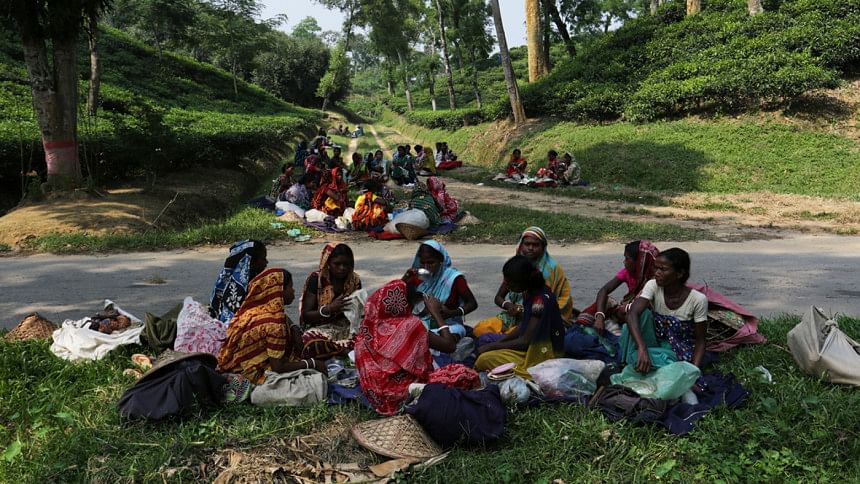
Photo: Philip Gain
The tea workers of Shamshernagar Tea Garden in Kamalganj upazila, Moulvibazar, took matters into their own hands in defiance of the garden management and stopped work from March 27. Owned by Duncan Brothers, Shamshernagar Tea Garden is a big garden with 2,404 registered workers. Early in the morning of March 27, a group of some 50 members of panchayets, elders, and workers went to the manager of the tea garden to tell him that they want to stop work.
“We argued with the manager in reference to the Prime Minister’s speech of March 25 and her instructions for everybody to stay at home,” said Srikanta Kanu Gopal, general secretary of Shamshernagar main garden panchayet. “But the manager responded with a letter from the Deputy Director of Labour (DDL), Sreemangal, saying that the holiday is not applicable for tea workers. Our lives are more precious than tea. So, we have shut down the tea garden.”
While the decisive action of panchayets and tea workers in Shamshernagar Tea Garden did not surprise Bangladesh Cha Sramik Union (BCSU), the lone union of nearly 100,000 registered tea workers, it was an embarrassment to Bangladesh Tea Association (BTA), which represents the owners of the tea gardens and the state.
BTA, with a circular of the Cabinet Division and the letter from the DDL in hand, has declined to stop operations of the tea gardens during the lockdown of the country from March 26 to April 4.
Shamsernagar Tea Garden also resumed its operations on March 30, with work hours up to 2pm. “The panchayets, UP members, and tea workers went to the manager to know if they will get wages and benefits if they do not work,” reported Asha Ornal, joint general secretary of the panchayet committee of Shamshernagar Tea Garden (main). “Understanding that the manager cannot make this decision, we proposed to work half-day from 30 March while we wait for a decision from the upper level. We do not want the tea workers to starve.”
The manager of Shamsernagar Tea Garden also corroborated this view, saying that the decision is not one that he can independently make, and that “we did not force anybody to work; the workers later joined work again.”
On the other hand, the Sylhet Valley Committee of BCSU has shut down all 23 gardens in the district. “We have sent letters to all managers in these tea gardens,” said Raju Guala, president of the Sylhet Valley Committee, “demanding full pay of wages and rations during the shutdown.”
The BCSU, relatively weaker at the negotiation table compared to the government and owners, sent a letter to the DDL in Sreemangal on March 26—asking for the state and owners to take appropriate measures to shut down the tea gardens with full pay and ration to the tea workers—when it saw a press release from the Cabinet Division directing all government and non-government offices to shut down. The DDL, Sreemangal, gave a quick response the same day: “According to the press release of the Cabinet Division, these general holidays are not applicable for the tea workers.”
The DDL, on a separate occasion, also said that the press release specifically says that manufacturers, distributors and traders of medicine, food and industries, institutions, markets and shops would run under their own management, and that the BTA said that they would run tea gardens under their own management since the government did not ask them to shut down operations. However, he said that they have asked all to ensure the safety and hygiene of workers during this period.
A topmost official of BTA, unwilling to be identified, confirmed that they are concerned but not prepared to shut down the tea gardens. “We are already beset with the falling prices of tea,” he said. “And like the tea workers, we also need help. With production costs going up, it has become a big challenge for us to run the industry.” The official said that the BTA will write to the appropriate government offices once the offices resume after April
However, Rambhajan Kairi, general secretary of BCSU, observed that this action will be too late by then. “We, the workers and the communities in the labour lines, are in a state of fear in the current situation.”
What is well demonstrated from the action of the tea workers in Shamshernagar Tea Garden and its four subsidiary gardens is that they do not have enough trust in BCSU’s soft move and in the garden management. It is true that the tea gardens are away from our sight, in what seems to be a distant place. But what is evident from the work conditions in the tea gardens and that in the labour lines where tea workers and their communities live is that they must maintain social isolation among themselves, like the rest of the country. The following are some arguments in support of the tea workers, who work six days a week and now want to stay home and protect themselves.
First, the tea workers, particularly the female tea leaf pickers, work in groups. There are no toilets and washing facilities under a shade at the workplace, as provided for by labour laws. The water man (paniwala) brings mainly portable water to their workplace. Many workers drink water from the same glasses. Some drink water poured onto the palms of their hands, which are not properly washed or even washed at all. What can be more dangerous than this for the spreading of a pathogen?
Second, there is no toilet for the female tealeaf pickers who work all day in the garden. They have to defecate in the open if it becomes necessary. After defecation in the open, they generally do not wash their hands with soap.
Third, proper hand wash, the single most significant practice in the fight against coronavirus, is almost non-existent in the tea gardens. I phoned some workers to know about hand wash practices at this time; they report cut pieces of soap have been supplied by the management, but the water that the paniwala brings and the soap are both inadequate. They still eat their lunch with hands that are dirty from plucking tea leaf. They also eat their lunch in open spaces and in groups, sitting close to each other.
Fourth, at the time of collection of tea leaves, twice a day, a few hundred tea leaf pickers huddle together with their head-loads of tea leaves. This is still done, during a time when the most feared pathogen on the planet may spread.
Fifth, patta, or selling of local liquor, is seen in almost all tea gardens, and is no less concerning. Patta attracts visitors from nearby cities and local Bengali villages. The law enforcing agencies, administration, union councils and BCSU can work together to at least temporarily close all pattas and strictly restrict outside visitors from entering the tea gardens.
One may wonder what is right for the tea workers and tea gardens in Bangladesh at this moment. We may check what has been happening in Indian tea gardens at this time of crisis. According to a Times of India report, tea gardens in Assam have decided to shut down all its operations during the state lockdown. “Tea is no more an essential commodity and hence will not fall in the list of exempted services during a lockdown period,” said Adviser of North Eastern Tea Association (NETA) Bidyananda Barkakoty in a statement. The Consultative Committee of Plantation Association (CCPA) has also announced that a tea garden lockdown is inevitable. However, essential services in Assam tea gardens will continue on a roster basis. Assam has at least 850 tea gardens employing two million workers, according to government records. While in Assam the owners, state government and trade unions have been working together for the safety of tea workers, what we see in Bangladesh is very sad. BTA, the counterpart of NETA in Assam, has taken a hardline stance on shutting down the tea gardens at the time of a global pandemic. We also do not see enough sympathy in the government agencies responsible for overseeing the wellbeing of tea workers.
What the panchayets and tea workers of Shamshernagar Tea Garden did on March 27, followed by other gardens in Moulvibazar district and finally, all gardens in the Sylhet division, demonstrate the desperation of the tea workers, who experience deprivation and neglect in their everyday life. It will not be surprising if workers shut down many more gardens as the days go by. The government offices are closed at this moment, as well as the BTA and BCSU offices. But we trust they can still discuss matters and take crucial policy decisions regarding shutting down the operations of tea gardens. We hope the tea workers can also be incorporated into the Tk 5,000 crore package announced by the government. A tiny slice from this amount will be sufficient to pay the wages of the tea workers during this emergency. The owners also have a responsibility so that the tea workers do not starve. Tea workers will volunteer to work according to a roster to prevent any permanent damage to the gardens, which is their lifeblood, but their concerns still need to be heard immediately.
Philip Gain is a researcher and director of the Society for Environment and Human Development (SEHD).
by admin | Aug 9, 2019 | Newspaper Report
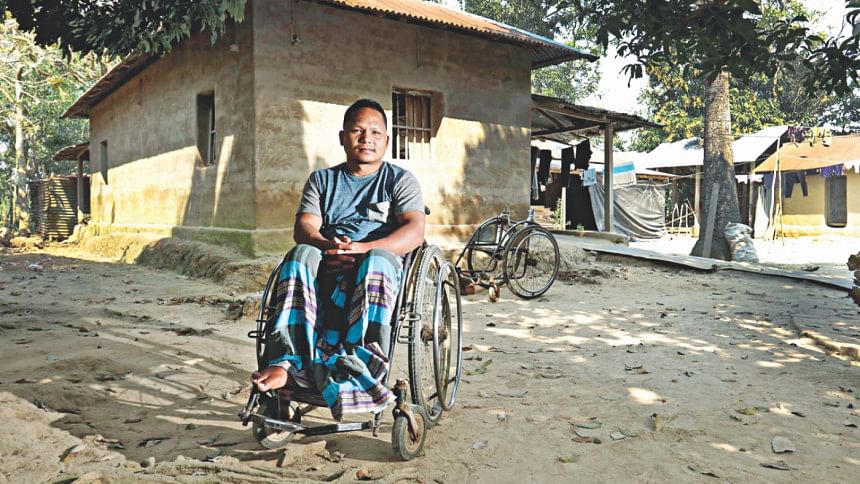
Utpal Nokrek on wheelchair. | News Link
Looking back at the Garo protestors who opposed the government’s decision to take away their ancestral land in Modhupur Forest to build a commercial eco-park
It was January 3, 2004. I was only 18. I joined a rally to protest the construction of the so-called eco-park within the Modhupur National Park—built on what we considered our ancestral land.
We assembled at Jalabadha-Rajghat in the south of our village, Beduria. This is where the Forest Department was constructing walls that would block our free movement. From there, we were supposed to march to Gaira in the Modhupur National Park, another Garo village in the south. But before we could go any further, our rally was blocked by Forest Department officials, forest guards, and armed police.
The law enforcers fired rubber bullets, at first. Then, as we were running away, they fired real bullets at us from behind. Piren Snal, 28-year-old Garo youth from Joynagachha village next to Beduria, was shot dead on the spot.
I fell to the ground. For a brief moment, I saw others running. Then I blacked out. When I regained consciousness, I found myself in a van—whether it belonged to the police or the forest guards, I do not know. I was soaked in blood. I could not move my body. Piren Snal, dead and covered in blood, was lying on my side, a bullet lodged in his chest.
“One has died and one is alive,” I heard the forest guards saying.
I lay there for hours—it was as if I was left to die. It was late afternoon when they finally removed Piren’s dead body from the van. With me lying face down on the floor, and a forest guard and policeman sitting on a bench, the van began to move towards Tangail or Dhaka.
It was such a painful journey on the bumpy road that I thought I would die. I wished I would die. I felt an excruciating pain in my back and chest. It was January, the coldest time of the year. I was shaking uncontrollably. It was somewhere near Modhupur that they gathered some straw from the ground and threw it over me.
Finally, we reached the Tangail Sadar Hospital. There, doctors located the bullet inside me but could not take it out. They concealed the bullet hole with a bandage and sent me to Dhaka.
I was lucky to be taken in an ambulance from Tangail to Dhaka. I was still in much pain. I was taken to National Institute of Diseases of the Chest and Hospital in Dhaka. Our ambulance arrived at the hospital in the dead of night. There was no surgeon at that time, so we were told to wait till morning.
I was screaming in pain. In the meantime, Dr Abdur Razzaque, the MP from our constituency, arrived. It was under his influence that the surgeon and his team assembled and the hospital got ready for an operation. The bullet was taken out at around 3am. It was not easy. The bullet had gotten stuck in my flesh and bones. The surgeon crudely cut the hole, without anaesthesia.
The next morning, the then forests and environment minister, Shajahan Siraj, came to see me. “You have nothing to worry about. You will get your treatment,” the minister tried to console me.
I did not have any feeling in the lower part of my body. A nurse brought a pin; she poked my leg. I felt nothing.
After a second surgery, this time with anesthesia, the doctors concluded that my spinal cord was permanently damaged. I was paralysed for life.
My life on wheelchair
From Dhaka Medical College I was taken to the Centre for the Rehabilitation of the Paralysed (CRP) in Savar. My life on a wheelchair began.
While at Dhaka Medical and CRP, I was always guarded by the police or forest guards until I took bail in a forest case, which was filed against me after I was shot. Apparently, I was accused of causing hindrance to the FD’s work!
People at the Forest Department started pressuring me and my family to take bail. While I was still at CRP, they took me to Tangail Forest court in a microbus and asked me to sign some papers that would ensure my bail. I refused because there was no one from my side—neither my parents nor a lawyer. My refusal angered the people at the Forest Department. They sent me to Tangail jail for a night and day. You can imagine what an experience it was—in jail, in a wheelchair that I was only just beginning to learn to manoeuvre.
My parents came to court the next day, secured my bail, and took me back to CRP.
All these years later, the forest case is still active. The police visited a few times to remind me that I am not appearing before the Forest Court in Tangail. Every time they came, they made me pay for the octane of their motor cycles.
Thirteen years have passed since I was shot, but I have not been able to file a case yet. No one from the Forest Department has ever come to see me and I have received no support from the government. All the assistance I received—a one-room building to set up a grocery shop and some cash—came from NGOs. My parents now run the shop.
Every day, I follow the same routine. I get up at 6am in the morning. I need about three hours to complete my morning rituals—go to the toilet, brush my teeth and bathe. I cannot do things like other people. I use a catheter every time I urinate. I have to guess when I have to urinate because my bladder no longer functions properly. I eat twice a day—breakfast at 10am and dinner at 7pm. I normally do not eat anything in between.
Once I realised I am permanently settled on a wheel chair, I lost interest in continuing my studies. I am unable to work. My parents and siblings take good care of me. We do not have much land, but we manage.
What has been done to me cannot be undone. All I want now is peace in our ancestral land.
As told to Philip Gain, researcher and director of Society for Environment and Human Development (SEHD)
by admin | Mar 8, 2019 | Newspaper Report
Purna Chisik and Satendra Nokrek have four daughters—Francila, Malita, Nomita and Malina—and two sons—Parmel and Sebastin. All six of the siblings have taken their family name, ‘Chisik’ from their mother Purna Chisik. This is normal for the Garo, the leading matrilineal society of Bangladesh.
In the Garo society, each individual belongs to the kinship group of the mother, not to that of the father. Daughters inherit land and other property. However, all daughters are not equal heiresses—one daughter, generally the youngest one, is chosen as nokna who inherits property and cares for her parents. Other daughters get land and other property, according to the wish of the mother. The sons get a tiny share of property, also at the discretion of the mother.
Purna Chisik of Dharati village in Kuragacha union in the Modhupur sal forest area selected her youngest daughter Francila Chisik as nokna. When Purna Chisik died in 2006, she left all her land—around 27 acres of chala (high) land and 6.9 acres of baid (low-land)—to her four daughters and two sons. This land amounts to 113 pakis (one paki is 30 decimals).
Her two sons were less fortunate in getting a share of their mother’s land—each getting two pakis (60 decimals). Three daughters—Malita, Nomita and Malina—got 3.3 acres each. The youngest daughter, Francilia Chisik, the nokna, got the rest, the biggest share of her mother’s property. Satendra Nokrek, Purna Chisik’s husband, who came to Dharati from another village, is now in his nineties. He lives with Francilia Chisik. He owns no property, but his daughters take very good care of him.
Francilia’s husband, Lipu Nokrek, is nokrom or resident son-in-law in the family. Lipu or their sons will not own or inherit Francilia’s land unless she voluntarily gives it to them.
What we see in Purna Chisik’s family about inheritance of land is more or less a common picture in the Garo society: the daughters inherit land and other property and the nokna gets the largest share. The son generally leaves his mother’s house and goes to his wife’s family as resident son-in-law.
However, the Garo matrilineality never implies that the women rule over Garo society. “It is true that women are owners of property, but protection of ownership and management is bestowed upon men,” says researcher and writer Subhas Jengcham. “It is the men who are omnipresent everywhere in society and they take advantage of all opportunities.”
“But matrilineality does help to give women a different status among the Garos than they have among the patrilineal people of the plains,” writes American anthropologist Robbins Burling in his book The Strong Women of Modhupur.
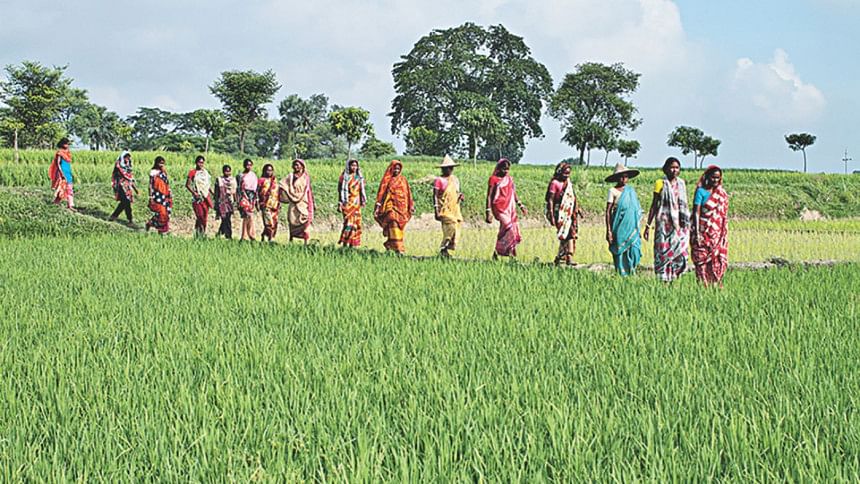
Burling is absolutely right. Women in the Garo society are equal to men. They may not qualify to become kamal (traditional healer and priest) and administer village courts (shalish), but they play a key role in educating their children, with equal attention paid to boys and girls. They make equal contribution to family income. They are seen working their own land, earning cash from work as day labourers, and drinking their favorite home-made rice beer chu alongside men.
Not all women, however, are fortunate to have enough land to work on, like the four daughters of Purna Chisik. Families having little or no land to work on send their daughters to work in beauty parlours. The Garo girls, young or aged, can travel to Dhaka independently and without a man accompanying her.
According to a 2018 survey of the Society for Environment and Human Development (SEHD), 1,131 Garo women or 6.8 percent of 16,644 Garo people from 44 forest villages in Modhupur work in beauty parlours. This is an astounding fact. Twin factors—land use change and independence of the Garo women—may have led to a large percentage of Garo women working in beauty parlours. It is to be noted that in Modhupur, a very high percentage of Garo households—from 56.5 percent to 84.7 percent—have leased their land to others, most of them Bangalee businessmen, for paddy, spice (ginger and turmeric in particular), pineapple and banana cultivation (SEHD survey 2018).
In Bangladesh, the only other matrilineal Adivasi community is the Khasi that lives in Sylhet Division. Like the Garo, Khasi women are the owners of land and they inherit their parents’ land.
The children also take their mother’s name. In case of separation of parents, the children stay with mothers in both Garo and Khasi societies.
The land issue among the Khasi is far more complex. In explaining the disputes over land, Gidison Pradhan Shuchiang, a myntri (head of punji) argues, “There are 15 Khasi punjis (villages) in the tea garden areas and we have disputes with the management in three of these gardens (Aslam and Kailin in Sreemangal upazila and Jhemaichhara in Kulaura upazila).”
Shuchiang further elaborates on the bigger land conflict between the Khasi and the forest department. “Eleven of 85 Khasi punjis in the Northeastern districts are well-established with land titles in the names of the Khasis,” reports Shuchiang. “In all but 15 punjis in the tea garden areas and 11 established ones, the Khasis have tension and disputes with the forest department. The Khasis claim they have been living on the land from time immemorial and the forest department gazetted that at a later stage.”
It is the myntri in a punji who is responsible for oversight of the land—a community property—that is distributed among the families. Right now, there are reportedly five women Khasi myntri. Women inherit land and participate in betel leaf cultivation—the key economic activity of the Khasi, sort out betel leaf, handle its sale, keep account books and do all other household chores—but they are perhaps not as vocal as the Garo women. In dealing with land issues with the forest department and the tea garden owners, it is mainly the myntri and males who are seen in the front line.
While Garo women move freely between their homes and cities in search of work and income, the Khasi women stay largely restricted to their punjis and betel leaf cultivation, their key economic activity. The Khasi women are also not seen working in the tea gardens that may be next to their punjis. Both Garo and the Khasi are matrilineal but the contrast between the Garo women and the Khasi women is very dramatic.
However, what is common about both Garo and Khasi is that the overwhelming majority of them are Christians, educated and exposed to the modern world. The men in these two matrilineal societies are also increasingly claiming their rights over property in various forms. Men from these matrilineal societies who have employment and earnings can hold property they have earned in their own names. They can also distribute their earned property equally among children. Many want their inheritance traditions changed, as reflected in the words of Subhas Jengcham—”In the Garo society, we want nokna and nokrom traditions changed so that women and men get equal share in their parents’ property.”
The other Adivasi communities around the country—be it in the plains or in the Chittagong Hill Tracts (CHT)—are all patriarchal and patrilineal. The ownership and inheritance of land among the Santal, Oraon, Munda, Koch and dozens of other ethnic communities in the Northwest, North-center and northeast (outside the tea gardens) are strongly influenced by Hindu law and customs. A woman in these communities does not own or inherit land unless her father or brother has willed it to her. It is only men in these societies who inherit land and property. A woman can use land and property after her father’s death if she does not have brother(s), but even then, it will revert to her uncle(s) or their sons, if any. But one thing about the women in these ethnic communities—from numerous Santal to tiny Kadar in Dinajpur—is that they are seen as hard working, engaged in wage labour and other menial work to grow crops and feed their families.
In the tea gardens, there are as many as 80 non-Bengali ethnic communities with a population of half million. Women constitute more than 50 percent of the workforce in 160 tea gardens in the Sylhet Division and Rangamati; and more than 90 percent of the tea leaf pickers are women. They live in the labour lines in tea gardens. An appalling truth is that they own no land. Of 113,663.87 ha of public land granted for production of tea, 12,291.88 ha are khet or paddy land that the tea workers can only cultivate under restrictions. They do not have titles for these pieces of land. Attempts to take away khet land by the tea garden owners or government have always been a deep concern for the tea workers.
Women in the tea gardens adhere to the patriarchal and predominantly Hindu community and are absolutely landless. Belonging to the lowest rung in the Hindu casteism, they were uprooted from their homes in Bihar, Madras, Orissa, Andhra Pradesh, Madhya Pradesh, West Bengal, Uttar Pradesh and other places in India and had been brought to their current location to work in the tea gardens. Women workers do the most painstaking work in the field picking tea leaf all day. But they are completely bereft of land and property rights including their homesteads and the houses they live in. “In India, Hindu laws have changed significantly and Hindu women have been given right to land,” says Shamsul Huda, executive director of Association for Land Reform and Development (ALRD). “But in Bangladesh Hindu laws have not changed to award right to land and property to women.”
The Chakma, Marma, Tripura, Bawm, Mro, Khyang, Chak, Tanhchangya, Khumi, Lushai and Pangkhua in three hill districts in the Southeast and Rakhine in Cox’s Bazar are also patriarchal. According to customary laws, women in these communities do not generally own or inherit land. But unlike the plains, some variations are reported from the hill districts.
There are also initiatives to reform the customary laws and practices in these communities. “We, the Bawms, have recently reformed our customary laws and are attempting to give a fair share of our land and property to our women,” reports ZuamLian Amlai, former president of Bawm Social Council. “Other indigenous communities in Bandarban are also following our footsteps and attempting to reform customary laws to award rights to the women to land and property.”
Marma women in Bohmong circle (Bandarban) get some share in property. “Sons, daughters and the wife of a deceased person all attain absolute rights over property, which is divided following the Digest of the Burmese Buddhist Law (also known as Shamuhada Law),” says Han Han, a Marma researcher. “However, the wife and daughters of a deceased person (husband or father) in Marma community living in Mong circle (Khagrachhari District) and Chakma circle (Rangamati), do not attain any property right, unless the deceased have gifted or willed it prior to death.”
According to customary law in Bandarban, sons are entitled to get three-fourths of the property while wife and daughters get one-fourth. Sometimes the ratio is modified as ten-sixteenth for the son and six-sixteenth for the daughters. Also, there are examples of Marma households where mutual agreements had superseded the law.
Han Han also reports that in Chakma, Tanchangya and Mro inheritance laws, women have no right to landed property. “Deceased’s son(s) attain the absolute right over his or their father’s property,” explains Han Han. “Deceased’s wife (if remained unmarried) and unmarried daughters receive maintenance from the property. In absence (death) of son, deceased’s son’s wife (widow), son’s son and unmarried daughters receive maintenance until marriage from deceased’s property or directly inherit the property.”
One thing about women and land in the three hill districts is that they are visible everywhere. Their hard work and constant attention are crucial for the maintenance of jum (slash and burn cultivation) in the hills. They are the ones who do most of the harvest and manage the sale of crops from jum and fields. In other agricultural works, sale of labour, and every economic activity they participate along with the men. Their connection with land is symbiotic, which is true of other Adivasi women in the plains and tea gardens. Sadly enough, justice is not done to Adivasi women when it comes to the right to land and inheritance.
Philip Gain is researcher and director of Society for Environment and Human Development (SEHD).